
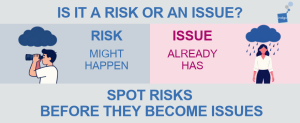
 The supplier’s gone quiet. The budget still isn’t signed off. And the one person who knows how the system works has just booked a fortnight in Spain. Nothing has gone wrong yet. But it might. So, is it a risk or an issue?
The difference is timing. A risk is something that might happen. An issue is something that has happened. Spotting risks early gives you time and choices. Once a risk becomes an issue, you’re no longer preventing a problem. You’re dealing with it.
Why the difference matters
It can sound like project jargon. In practice, it changes how you respond.
- With a risk, you still have options. You can reduce the chance of it happening, prepare a fallback, or decide it’s small enough to accept. You’re planning ahead.
- With an issue, the options shrink. It’s already affecting your project, so you need to act now, decide who handles it, and tell the people affected.
When the two get mixed up, projects suffer in predictable ways:
- Risks are treated as someone else’s problem until they turn into issues and land on your desk.
- Issues are described as risks, so nobody realises how urgent they are.
- Every concern is treated as a crisis, so people stop listening when something serious does happen.
A risk might happen. An issue already has. Can you score 5/5?
Many issues start as risks
Look back at a project that ran into trouble, and you’ll often find the warning signs were there. The supplier had been late before. The specialist was already overloaded. The approval process always took longer than planned.
Someone probably noticed. But nobody said it out loud, wrote it down or agreed what to do. So when the risk turned into an issue, it arrived as a surprise. That’s why it’s worth asking whether something is a risk or an issue. It forces you to think about what could happen, not just what already has.
Of course, not every issue can be predicted. But recognising the warning signs gives you a better chance of dealing with problems before they disrupt your project.
One habit that helps you spot risks early
At the start of each week, ask yourself one question: what could stop this project going to plan?
Think about what could have the biggest impact on your project. Is there anything you could do now to reduce the chance of it happening or limit the disruption if it does?
It might mean checking in with a supplier, speaking to someone whose input you need or raising a concern before it becomes urgent. That simple habit can help you move from reacting to problems to seeing them coming.
Talking about risks without sounding negative
Many people avoid raising risks because they don’t want to seem negative or they worry it will look as if they can’t cope. But flagging a risk early is a sign of good project management, not a lack of confidence.
The key is to be specific and constructive. Rather than “I’m worried this might go wrong”, explain what could happen, what the impact would be and what you suggest doing about it. Stakeholders are far more comfortable with a risk you’ve spotted and planned for than with an issue that takes them by surprise.
Learn to manage risks and issues with confidence
Knowing whether something is a risk or an issue is just the start. You also need to know which risks matter, what to do about them and how to keep the right people informed. That’s what helps keep projects on track.
If you manage projects alongside your usual responsibilities, you may never have been formally trained in project management. You might be coordinating a system change, introducing a new process or managing a supplier, all while trying to keep on top of your day job. You still need a reliable way to plan the work, manage the risks and keep things moving.
Our Project Management Survival Guide™ is a practical two-day workshop for people who manage projects without “project manager” in their job title. You’ll learn how to plan, track and deliver your projects, spot potential problems early, manage risks and keep stakeholders on board.
You can join a public workshop online or in London, alongside people from other organisations, or bring the workshop in-house. Training your team together gives everyone the same approach to planning, risks and reporting, so problems are spotted sooner and handled consistently.
Find out more about the Project Management Survival Guide™
Juggling several projects at once? Read Managing multiple projects alongside the day job.
Need to share bad news with stakeholders? Read Giving status updates people remember.
Frequently asked questions
What is the difference between a risk and an issue?
A risk is something that might happen and would affect your project if it did. An issue is something that has already happened and is affecting your project now. Risks need planning; issues need action.
How do I know if something is a risk or an issue?
Ask whether it has happened yet. If it hasn’t, it’s a risk, and you still have time to reduce the likelihood or prepare for it. If it has, it’s an issue, and you need to decide what to do about it.
Can a risk turn into an issue?
Yes. A risk becomes an issue when the uncertain event actually happens. That’s why it pays to look ahead regularly and deal with potential problems before they become issues.
Can a risk be positive?
Yes. A risk is any uncertain event that could affect your project, for better or worse. A positive risk, sometimes called an opportunity, might be finishing early or costs coming in lower than expected. When you’re managing potential problems, though, the aim is to spot the threats early enough to do something about them.
Should I tell stakeholders about risks?
Yes, especially the ones that could affect deadlines, costs or quality. Explain what could happen, what the impact would be and what you plan to do about it. Most stakeholders would much rather hear about a risk early than be surprised by an issue later.
Do I need formal training to manage project risks?
You don’t need a project management qualification to manage a project, but training can make a real difference. If you’re managing projects alongside your day job, learning how to plan, identify risks and deal with issues gives you a more reliable approach than simply working things out as you go.