

 You’ve done the work. You walk into the meeting, give your update, and five minutes later someone asks a question you’ve just answered. A week on, your manager can’t remember whether the project is on track.
It’s not that people weren’t listening. Most project status updates are easy to forget.
So, how do you give an update that sticks? Think about who you’re talking to before you speak, lead with what they most need to know and keep the detail for anyone who asks. A good update is short, clear and focused on what matters to the listener, not everything you’ve done.
Why most project status updates are forgotten
Most updates follow the order the work happened. We did this, then this, then we hit a problem, then we fixed it. It feels thorough, but it makes your audience do the hard work of finding the point.
By the time you get to the bit that matters, such as a delay, a decision you need or a risk on the horizon, people have tuned out. Or the meeting has moved on.
Other common problems include:
- Too much detail, so the important message gets lost.
- No clear ask, so nothing happens after the meeting.
- One update for everyone, when the finance lead, the sponsor and the team all care about different things.
On-the-spot updates are the hardest
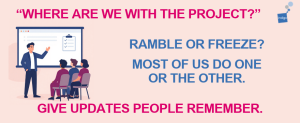
A written report gives you time to think. The “quick update” doesn’t. Your manager stops you in the corridor, or the chair turns to you halfway through a meeting: “Where are we with the project?”
In that moment, most of us either ramble or freeze. We start at the beginning, add caveats and hope the point emerges. Afterwards, we think of exactly what we should have said.
The challenge isn’t necessarily confidence. It’s being able to organise your thoughts quickly enough to give a clear, relevant answer while someone is waiting for it.
Responding clearly when you’re put on the spot is a skill, and you can learn it.
One question to ask before every update
Before you give any project update, ask yourself: what does this person need to know, and what do I need from them?
The answer changes everything. Your sponsor may only need to know whether the project is on track. The finance lead wants to hear about costs. Your team needs to know what’s changed for them. And if you need a decision, say so early, rather than hoping someone offers one.
That one question turns an update from a report of what you’ve done into a conversation about what happens next.
What to include in a project status update
A good project status update doesn’t need to cover everything that’s happened. It needs to give people a clear picture of where things stand and what happens next.
Focus on four things:
- Status: Is the project on track, at risk or behind schedule?
- Progress: What’s been completed since the last update?
- Issues: What has changed, and what needs attention?
- Next steps: What happens next, who needs to do it, and do you need a decision or support?
The amount of detail will depend on who’s listening, but these four points give you a useful starting point. Keep the message focused on what matters to your audience, rather than simply working through a list of completed tasks.
Updates are part of a bigger conversation
Status updates don’t happen in isolation. The people you update are your stakeholders. Understanding what matters to each of them makes it easier to give updates that land.
If you know who’s worried about cost, who cares about quality and who simply wants no surprises, you can shape every update around them. The same information may need to be communicated differently depending on who’s listening.
Group updates bring another challenge. One person dominates, someone else stays quiet, and the discussion goes round in circles. A structured approach to discussion gives everyone a chance to contribute and helps the group reach a decision, rather than just talking.
Make every update count
Our Think on Your Feet® workshop helps people communicate clearly, briefly and persuasively, especially when they’re put on the spot. You’ll learn how to organise your thoughts quickly and deliver a message people remember, whether that’s a status update, a question in a meeting or a conversation in the corridor.
If your updates go to a wide range of people, our Stakeholder Engagement workshop helps you understand your stakeholders before you update them, so every message is relevant to the person hearing it.
And if your project meetings struggle to reach decisions, Six Thinking Hats® gives your team a structured way to explore different perspectives, so discussions are more productive and decisions are better considered.
You can attend a public workshop alongside people from other organisations or bring the training in-house. Training your team together gives everyone a shared approach to communication, stakeholder engagement and decision-making, making it easier to keep projects moving.
- Find out more about Think on Your Feet®
- Find out more about Stakeholder Engagement
- Find out more about Six Thinking Hats®
Want to know why communication matters on every project? Read Project communication skills: the reason good plans still fail.
Juggling several projects at once? Read Managing multiple projects alongside the day job.
THE UK HOME OF THINK ON YOUR FEET®
Clarity, brevity & impact® under pressure
Explore the programme, see what it can do and read delegate reviews at thinkonyourfeet.co.uk.
Frequently asked questions
What should a project status update include?
A good project status update should cover four things: current status, progress, issues or risks, and next steps. Explain whether the project is on track, what’s been completed, what needs attention and whether you need a decision or support. Keep the detail relevant to the people listening.
How long should a project status update be?
As short as possible while still being useful. In a meeting, aim for a minute or two. If people want more detail, they’ll ask, and that becomes a conversation rather than a monologue.
How do I give a clear update when I’m put on the spot?
Pause, think about what the person most needs to know, and lead with that. It’s better to give one clear point than five rushed ones. Responding well under pressure is a skill you can learn and practise.
Should I give the same update to everyone?
No. Different stakeholders care about different things. A sponsor may want to know whether the deadline is safe, while a finance lead wants to hear about costs. Tailoring each update makes it more relevant and more likely to be remembered.
How do I stop project meetings going round in circles?
Agree the purpose of the meeting at the start, make sure everyone has a chance to contribute and focus the discussion on one perspective at a time. A structured approach to discussion helps groups reach decisions and makes sure quieter voices are heard.